Whispers of Change: The Solidarity Visit's Subtext
Whispers of Change: The Solidarity Visit's Subtext
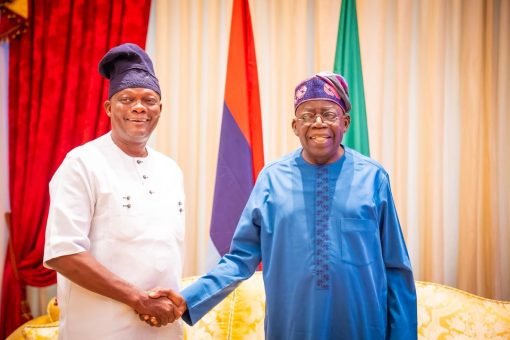
In the bustling political epicenter of Nigeria's capital, Abuja, a quiet yet thunderous event has taken place—a high-level meeting between factions of Nigeria's opposition parties, the Peoples Democratic Party (PDP) and the African Democratic Congress (ADC). As reported by TVC News, Oyo State Governor Seyi Makinde, spearheading a faction of the PDP aligned with the Turaki-led bloc, extended a solidarity visit to the leadership of the ADC. This move, following a clandestine gathering in Abuja, has set the stage for what promises to be a dramatic reshaping of Nigeria's political landscape ahead of the 2027 general elections.
The visit, nestled amidst growing political activity and a sense of urgency, carries with it a profound message. It echoes the warnings dispensed by various factions against endorsing Mr. Tinubu in the upcoming elections, as detailed by Peoples Gazette. The closed-door meeting, involving key opposition figures such as Atiku, Peter Obi, and Makinde, suggests a strategic consolidation of forces, a premonition of a political realignment that could alter the fate of the nation.
The Dance of Elephants: Convergence of Opposition Titans
In a political theater where every move is laden with meaning, the meeting between the PDP and the ADC is more than a simple convergence; it is a dance of political elephants. Leadership Newspaper captured the essence of this alliance, highlighting the unity displayed among opposition forces in the face of rising political tensions. The delegation from the PDP, which included influential figures such as Governor Seyi Makinde and former Minister Kabiru Tanimu Turaki, met with their ADC counterparts, representing a collective concern over the increasing pressure and "targeted attacks" on opposition platforms in Nigeria.
The Nigerian Tribune provided further insights, revealing the pivotal nature of the meeting as key opposition figures, including Atiku Abubakar, Seyi Makinde, Peter Obi, and Rabiu Musa Kwankwaso, convened in Abuja. This assembly was not just a meeting; it was a critical juncture where the future of Nigeria's opposition was being sculpted. Business Hallmark added another layer to this narrative, indicating that the closed-door meeting was an early move towards a possible opposition realignment, underscoring the strategic importance of such gatherings.
The Uneasy Calm: Internal Party Dynamics and External Pressures
As the opposition factions realign, they do so against a backdrop of internal crises within both the PDP and the ADC. Premium Times highlighted a closed-door meeting that took place after a protest at the Independent National Electoral Commission (INEC) headquarters by a faction of the ADC, reflecting the internal discord that plagues the parties. These internal struggles are coupled with external pressures, as opposition parties grapple with the weight of political persecution and the need to present a united front against the ruling party's dominance.
Vanguard News provided a visual narrative, capturing the gravity of the situation with images of PDP and ADC leaders in closed-door talks. These images serve as a stark reminder of the high stakes involved and the secrecy that often shrouds such power negotiations. Sun News Online further emphasized the significance of these meetings, as opposition heavyweights, including Atiku Abubakar and Seyi Makinde, signaled fresh moves to realign political forces ahead of the 2027 elections.
Echoes of the Past, Omens for the Future: Historical Precedents and Forward-Looking Analysis
The meeting between the PDP and ADC factions is not an isolated event but part of a continuum of political realignments in Nigeria's history. PM News Nigeria framed the meeting as a high-level closed-door affair, fueling speculation of a potential political alliance. This gathering is reminiscent of past alliances that have shifted the tides of Nigerian politics, and it is against this historical backdrop that we must consider the implications of such a meeting.
Google News Nigeria, citing TheCable, reported on the breaking news of the talks between the David Mark ADC faction and the Turaki-led PDP. These talks signify a potential shift in the political sands, a reconfiguration that could have far-reaching consequences for the 2027 elections and beyond.
The Fault Lines of Democracy: Future Implications and the Road Ahead
As Nigeria stands on the precipice of a potential political realignment, the implications are manifold. The opposition's unity could either fortify the democratic process or exacerbate existing divisions. The meeting in Abuja, as described by various sources, is a harbinger of things to come, a potential blueprint for a more cohesive opposition strategy or a band-aid solution to deeper fractures within the parties.
The future implications of this gathering are vast. It could lead to a more organized opposition, better equipped to challenge the ruling party. However, it could also result in further factionalization, with each group vying for power within the newly formed alliances. As Nigeria navigates these turbulent political waters, the nation and its people will be watching closely, waiting to see which way the wind of change will blow.
Analyzing the Dynamics: The Potential Impact on Nigeria's Political Landscape
In Nigeria's often volatile political climate, the coming together of key opposition figures from different factions is a development of significant magnitude. According to PM News Nigeria, the high-profile nature of the attendees at the Abuja meeting suggests a strategic move to consolidate opposition forces. This move could potentially alter the dynamics of the country's political landscape, especially as the 2027 elections draw closer.
Historically, Nigeria has seen instances where political alliances have either bolstered the democratic process or led to internal strife within political parties. A case in point was the formation of the All Progressives Congress (APC) in 2013, which led to the defeat of the then-ruling People's Democratic Party (PDP) in the 2015 elections. The APC's victory was attributed to its broad-based coalition that included defectors from the PDP and other smaller parties, illustrating the power of a united opposition.
The Role of Key Figures: Atiku Abubakar and Seyi Makinde
The involvement of heavyweights like Atiku Abubakar, a former Vice President and presidential candidate, and Seyi Makinde, the Governor of Oyo State, adds weight to the potential political realignment. Their influence and following could sway a significant portion of the electorate, which could be a game-changer in a closely contested election.
The Challenge of Unity
However, the challenge lies in maintaining unity among these factions, each with its own interests and agendas. TheCable, as cited by Google News Nigeria, points out the complexities of such alliances, which often struggle to balance the divergent goals of their constituent parties. The history of political realignments in Nigeria is replete with instances of initial unity giving way to internal power struggles and disagreements over policy directions.
The Path to 2027 Elections
As the 2027 elections approach, the opposition's ability to present a united front will be crucial. A cohesive opposition could challenge the ruling party more effectively, providing a stronger check on its power and potentially leading to more balanced governance. Conversely, a fractured opposition could lead to a lack of clear alternatives for voters, which may result in disengagement and a weakened democratic process.
The Broader Implications for Democracy
The implications of these political maneuvers extend beyond the electoral arena. A united opposition could lead to more robust policy debates, encouraging diversity in political thought and fostering a more vibrant democracy. It could also set a precedent for future political cooperation, potentially leading to a more mature political culture in Nigeria.
On the other hand, if the realignment fails to produce a cohesive opposition, it could exacerbate existing divisions and further entrench the ruling party's power. This scenario could lead to a lack of accountability and stifle the voices of dissent, undermining the democratic process.
Conclusion
The Abuja meeting between the PDP and ADC factions, with the involvement of key opposition figures, marks a significant chapter in Nigeria's political history. As the nation traverses the road to 2027, the success or failure of this potential realignment will have far-reaching consequences for the country's democratic future. It is a moment that will be closely watched by political analysts, citizens, and the international community, as it could shape Nigeria's political trajectory for years to come.
📰 Sources Cited
- TVC News: Makinde Leads PDP Turaki Faction In Solidarity Meeting With ADC
- Peoples Gazette: Atiku, Peter Obi, Makinde in closed-door meeting between ADC, PDP
- Leadership Newspaper: Turaki-led PDP Visits Mark-led ADC In Show Of Unity
- Nigerian Tribune: UPDATED: Details emerge as Atiku, Makinde, Peter Obi, Kwankwaso, others meet in Abuja
- Business Hallmark: Atiku, Obi, Amaechi, Makinde, Turaki other ADC, PDP figures in closed-door meeting over 2027 strategy
- Premium Times: Atiku, Obi, Makinde, other opposition leaders hold closed-door meeting after protest at INEC headquarters
- Vanguard News: Photos: PDP, ADC leaders hold closed-door talks in Abuja
- Sun News Online: Opposition heavyweights meet in Abuja amid ADC, PDP crises
- PM News Nigeria: Opposition heavyweights storm Abuja as PDP, ADC hold secret alliance talks
- Google News Nigeria: BREAKING: David Mark ADC faction holds talks with Turaki-led PDP - TheCable
0 Comments
Sign in to commentNo comments yet. Be the first to share your thoughts!