The Tug of War: INEC's Stance on Autonomy and the Call to Arms
The Tug of War: INEC's Stance on Autonomy and the Call to Arms
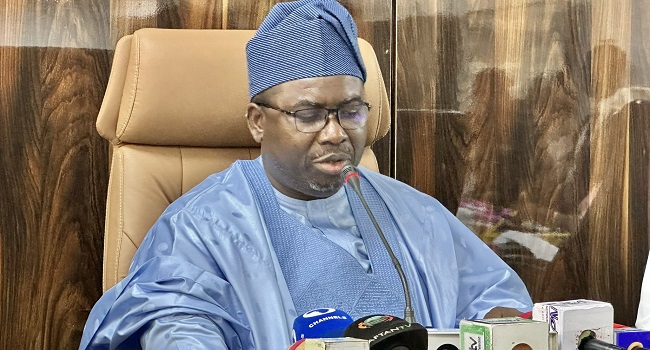
Amidst the cacophony of political voices in Nigeria, a silent yet powerful storm has been brewing within the hallowed halls of the Independent National Electoral Commission (INEC). With the nation's political landscape as their canvas, INEC has firmly dismissed the tumultuous calls for the resignation of its Chairman, Professor Joash Amupitan (SAN), characterizing such demands as a direct assault on its constitutional independence, as stated by Channels TV. In a nation where political play is as intricate as the ancient games of checkers, INEC's Chief Press Secretary, Adedayo Oketola, has stood as a sentinel, declaring that any public comments suggesting bias against the Chairman are unfounded.
This bold assertion by INEC comes on the heels of its decision to bow to the Court of Appeal's ruling, a move that has sent ripples through the already fragile fabric of Nigeria's electoral process. In a country where the appointment, tenure, and removal of the Chairman and National Commissioners are strictly dictated by law, the Chairman does not merely hold office at the behest of any political party or interest group. The orchestrators of this political drama are aware that any call for removal outside the constitutional process is a challenge to the very core of the nation’s electoral umpire.
The Battle Lines Drawn: The IPAC's Warning and the APC's Unconcern
As the African Democratic Congress (ADC) finds itself entangled in a crisis, the Inter-Party Advisory Council (IPAC) has not hesitated to throw its weight into the fray. Punch Nigeria reports that IPAC has criticized INEC's handling of the ADC crisis, cautioning against premature decisions that could undermine Nigeria's electoral system and create instability. In a political theater where every move is scrutinized, the IPAC's warning resonates as a clarion call to tread carefully, lest the nation stumbles into a quagmire of chaos.
Meanwhile, the APC has taken a step back, displaying a nonchalant attitude towards the ADC's internal strife. According to Peoples Gazette, the APC spokesperson has attributed the derecognition of Mark and Aregbesola by INEC as a self-inflicted wound, stemming from their disregard for the party’s constitution and rule of law. This aloof stance from the APC, a titan in Nigeria's political arena, reveals a complex tapestry of power dynamics where the fate of smaller parties hangs in the balance.
The Unwavering Resolve: ADC's March Towards Congresses and Convention
In the face of INEC's decision to no longer recognize factions within the ADC, the party has shown an unwavering resolve to proceed with its planned congresses and national convention. As reported by Daily Trust, the ADC, undeterred by the position of INEC on its internal leadership dispute, has declared that it will forge ahead. Bolaji Abdullahi, the party’s National Publicity Secretary, has stated that the party would not halt its activities, emphasizing that due process had been followed.
This defiance is not without foundation. Abdullahi mentioned that the party has given INEC 21 days’ notice, and they have accepted the notice. The tension at INEC headquarters, as described by Leadership Newspaper, has been palpable, with the de-listing of the National Working Committee (NWC) of the ADC from its official portal. This move by INEC has only served to heighten the stakes in this political chess game.
The Unraveling Threads: Legal Wranglings and their Broader Implications
Abdullahi has raised concerns about INEC’s actions and their broader implications for the political process. ICIR Nigeria reports that the ADC has rejected INEC's stance, choosing to proceed with its congresses and convention despite the commission's decision to stop recognizing the party’s leadership. This legal wrangling has not only put the party at odds with INEC but also has broader implications for the stability of Nigeria's political environment.
Abdullahi has criticized a proposed voter revalidation exercise by INEC, warning that it could create unnecessary challenges for voters. This criticism underscores the delicate balance that must be struck between ensuring electoral integrity and avoiding undue obstacles for the electorate. The ADC's crisis is not an isolated incident but a microcosm of the broader challenges facing Nigeria's electoral system.
Future Implications: The Path Forward in Nigeria's Political Odyssey
As Nigeria's political journey continues, the path forward is fraught with both challenges and opportunities. The ADC's crisis has laid bare the complexities of navigating a political landscape where the lines between constitutional independence, party interests, and the rule of law are often blurred. The decisions made by INEC and the reactions from IPAC and the APC are not just about the fate of one party but about the health of Nigeria's democracy.
The coming months will be a testament to the resilience and adaptability of Nigeria's electoral institutions. The nation must find a way to balance the competing demands of its political parties while upholding the principles of fairness and constitutionality. It is a delicate dance, one that will require the wisdom of Solomon and the tenacity of a thousand warriors. As the storm unleashed by the ADC's crisis rages on, the eyes of the nation and the world are fixed on Nigeria, watching to see if it can weather this tempest and emerge stronger on the other side.
The Role of INEC: Navigating the Complexities of Electoral Oversight
The Independent National Electoral Commission (INEC) plays a pivotal role in Nigeria's political landscape, tasked with ensuring free, fair, and credible elections. Its decisions, therefore, have far-reaching consequences on the political process, as seen in the case of the ADC. According to officials from INEC, the decision to withhold recognition from certain party factions is in line with its commitment to uphold electoral integrity and adherence to the nation's electoral laws. However, as Punch Nigeria reported, this approach has been met with resistance, highlighting the delicate balance INEC must maintain between enforcing regulations and avoiding overreach.
The Tussle Between Political Parties and Electoral Oversight
The ADC's defiance of INEC's decision to halt its activities exemplifies the tension between Nigeria's political parties and the electoral body. This standoff has the potential to disrupt the political equilibrium, as it challenges the authority of INEC while also testing the limits of party autonomy. The Nigerian Tribune highlighted the ADC's position, stating that the party views INEC's actions as unconstitutional, thereby choosing to proceed with its scheduled congresses and conventions. This move not only reflects a broader defiance but also raises questions about the checks and balances within Nigeria's political system.
The Impact on Nigeria's Democratic Process
The ongoing disputes between political parties and INEC have significant implications for Nigeria's democratic process. As Guardian Nigeria reported, experts warn that such conflicts could erode public trust in the electoral system if not resolved amicably and swiftly. The credibility of elections is paramount, and the perceived fairness of the process is crucial for maintaining the legitimacy of elected officials and the government as a whole. The current crisis has the potential to undermine this credibility, should it lead to further polarization and a lack of consensus on electoral rules and procedures.
Public Perception and the Quest for Trust
Public perception plays a critical role in the success of any democratic system, and the ADC's crisis has the potential to impact this perception negatively. As Premium Times Nigeria noted, there is a growing concern among citizens about the transparency and fairness of electoral processes, with some questioning the impartiality of INEC. This sentiment, if left unchecked, could lead to widespread disillusionment and a decrease in voter turnout, which would be detrimental to the health of Nigeria's democracy.
The Need for Constitutional Clarity and Reform
The crisis within the ADC and the broader implications for Nigeria's political environment underscore the need for constitutional clarity and reform. The争执 over voter revalidation and party recognition highlights areas where the current legal framework may be ambiguous or insufficient. Addressing these issues is essential for ensuring that all parties can operate within a clear and consistent set of rules. Vanguard Nigeria reported that calls for reform are growing, with many advocating for a more robust legal framework that can address the complexities of modern electoral processes.
Conclusion: The Path to a More Resilient Democracy
As Nigeria navigates the challenges presented by the ADC crisis and other similar incidents, the path forward requires a concerted effort from all stakeholders. It is a path that must be tread carefully, with a focus on strengthening institutions, ensuring constitutional clarity, and fostering a political culture that values dialogue and compromise. The resilience of Nigeria's democracy hinges on its ability to navigate these turbulent waters and emerge with a more robust and inclusive electoral system. The world watches as Nigeria's political odyssey continues, hoping for a resolution that will strengthen its democratic foundations and set a positive precedent for other nations facing similar challenges.
📰 Sources Cited
- Channels TV: INEC Rejects Call For Amupitan’s Resignation
- Punch Nigeria: ADC crisis: IPAC faults INEC, warns against premature decisions
- Peoples Gazette: INEC’s derecognition of Mark, Aregbesola self-inflicted; APC unconcerned about ADC’s affairs: Spokesperson
- Daily Trust: ADC ignores INEC, vows to go ahead with congresses, convention
- Leadership Newspaper: Tension At INEC Headquarters As ADC Crisis Deepens
- ICIR Nigeria: ADC rejects INEC stance, to proceed with congresses, convention
0 Comments
Sign in to commentNo comments yet. Be the first to share your thoughts!